
Prince & Saint Peter Ordynskii
Test
International Special Focus Private School
Ulaanbaatar, Mongolia
Test
International Special Focus Private School
Ulaanbaatar, Mongolia
(Grand Opening Fall 2026)
Our Vision: ‘Bringing your children back to you’. They are yours. We help prepare them in mind and heart for the challenges of the larger society ahead
Program Quotas: to provide ‘high quality’ learning environments and holistic academic investment for your children we maintain comfortable teacher-student ratios each school year
Programs:

See our range of speakers who spoke at the event in Athens!
Find details

Find out who organized WordCamp Europe 2023 and our teams involved.
Find details

Our list is here – see which members of the WP community joined us!
Find details

Saint Peter Ordinsky was founded to provide you with …
Commemorated on June 30
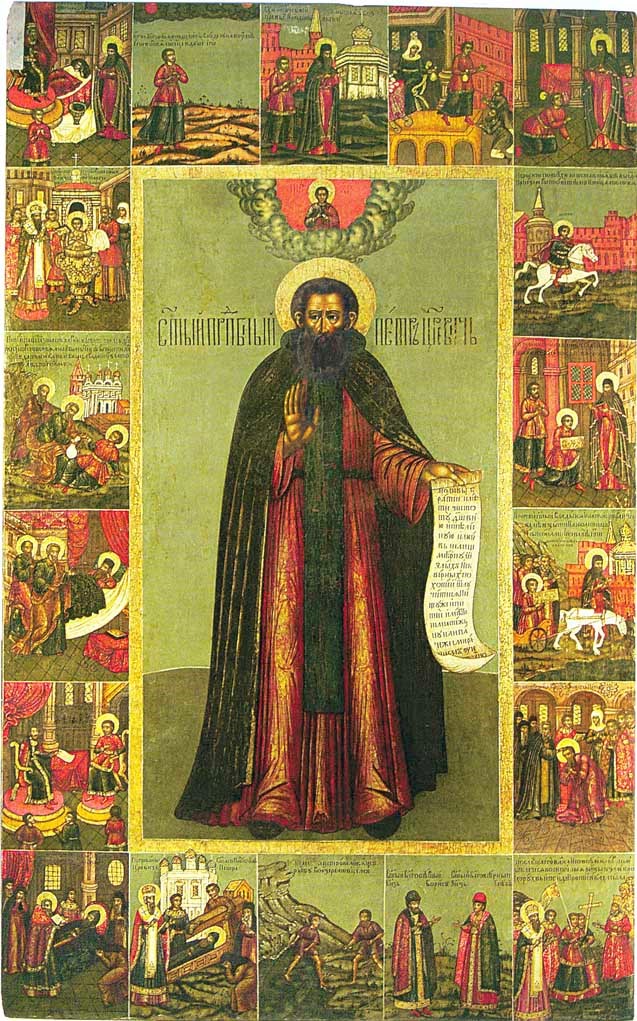
Saint Peter, Prince of the Horde, was the nephew of Bergai Khan of the Golden Horde. In the year 1253 Saint Cyril, Bishop of Rostov (May 21), went to the Horde to petition for church needs in his diocese and he told the khan about the Christian Faith, and of the miracles and healings worked by the relics of Saint Leontius of Rostov (May 23). Among the retinue was the young nephew of the khan, upon whom the holy bishop made a very strong impression. After some length of time the son of Bergai fell ill. Remembering the account of the Russian bishop about the healings, he summoned Saint Cyril, and through his prayers the sick one was healed. The khan richly rewarded Saint Cyril and sent him off to his diocese.
Along the way the lad, the nephew of Bergai Khan, overtook the holy hierarch, and entreated him to take him along to Rostov. At Rostov the boy was baptized with the name Peter, and he married. Saint Peter distinguished himself with a love for silence, contemplation, and prayer. After a miraculous appearance to him of the Apostles Peter and Paul he built a monastery near Lake Nera in their honor. After the death of his wife, shortly before his own death in 1290, the saint embraced monasticism at the monastery he had founded.
Local veneration of the holy Prince Peter began in the fourteenth century. A general celebration was established at the Council of 1547
Known for …
Peter, we are told, was a jonon [jinong 濟農], a Mongol title derived either from the Chinese Jin Wang 晉王 ‘King of Jin’ or qinwang 親王 ‘prince’, that translates into Russian as tsarevich. We do not know his birth name, only his baptismal one. He was the nephew of Berke Han [Mongol. Бэрх хаан, Tatar Бәркә Хан, Ch. Bie’erge Han 別兒歌汗] – the first truly independent ruler of the Golden Horde – and therefore the grandson of Joshy Han. Berke Han attacked Poland-Lithuania, the Volga Bulghar polity and even the Byzantine Empire during his expansions of the Horde, and by the time he became ruler the principality of Vladimir-Suzdal – the ancestral polity at the core of what would become the Russian Empire – had already submitted as a vassal state to the Horde.
He would not baptise the jonon, but neither could he disallow the young Mongol nobleman from riding with him back to Rostov. Once there, the nephew of Berke Han at once went into the Cathedral to hear the Divine Liturgy. From the times of the knyaz Konstantin Vsevolodovich ‘the Wise’, the Divine Liturgies in Rostov had featured antiphonal choral singing in both Greek and Church Slavonic. The beauty of the singing made a further profound impression upon the young Mongol, who desired with all his heart to approach Christ in His Church. Bishop Saint Kirill, unfortunately, understood what it would mean if the kinsman of Berke Han, now a Muslim, were to convert to Orthodox Christianity at his hands. The collective reprisals for apostasy, even among the Turks and the Mongols who adopted Islâm, could be harsh. Thus, he would have to wait until the death of his uncle and the rise of his kinsman Meńgu Temir Han, to receive Holy Baptism – by which time Saint Kirill too had also reposed in the Lord. He would be given the name Peter in baptism by Saint Kirill’s successor Saint Ignatii; the Russians called him ‘Peter Ordynskii’.
Since the Mongols left the Orthodox Church alone, it allowed the Church to fill the power vacuum left empty by the princes. It then forced the princes to take the power of the Church considerably more seriously after the Mongols were expelled. The Church was able to take a much larger and more personal role in the lives of the Rus people. Moving forward, this gave the Church leverage against the grand princes because they were the moral authority behind his rule. The fact that the Church was able to stand strong while the princes failed also might have spread the belief that no matter the opposition, the power of god would always support the Orthodox Church.
The purpose of this article was not only to demonstrate some key episodes related to the history of Orthodoxy in Mongolia ahead of the 160th anniversary of its existence, but also to show that the example of Mongolia and its Orthodox community clearly shows the universal nature of the Orthodox faith, where there is neither Greek nor Jew (Col. 3:11); neither a local Russian, nor a Mongol, nor a Russian diplomat, nor a descendant from a mixed marriage (whether between a Russian and a Mongolian or a Mongolian and a Briton)…
In the thirteenth and the fourteenth centuries, the imperial mood of Mongolian khans allowed them to become closer to Orthodox preachers, who felt comfortable in the capital of the empire—Karakorum. A natural development of these relations was the establishment of the Diocese of Sarai in the Golden Horde, which bound together the Horde and Russia, performing certain diplomatic mediation functions for the Byzantine Empire and the Russian princes alike.
The clergy of the Diocese of Sarai and other dioceses bordering the Horde, despite their secure existence under imperial patronage, were quite passive in mission. Despite this, the scarce (in terms of numbers) preaching of Orthodoxy had a wholesome effect on the hearts of some individual Horde representatives. And speaking about some of the major figures of the joint Russo-Mongolian past, we can’t ignore their confession of the Orthodox faith. First of all, these are three saints: the Right-Believing Prince Alexander Nevsky, the Venerable Tsarevich Peter of the Horde and the Holy Hierarch Alexei of Moscow.
The history of Orthodox Mongolia of the nineteenth–early twentieth centuries acquaints us with the great spiritual labors of a number of priests who bound together the churches of the Irkutsk Diocese, Transbaikalia, Mongolia and China, and in most cases remained faithful to God to the death. And if readers have a desire to pray for the repose of the souls of the Orthodox clergy of Urga, it would be the best tribute to Archpriests John, Mily and Fyodor, Hieromonks Sergei, Gerontius and Cornelius, Priests Alexei, Vsevolod, and two Nicholases.
Source: Orthodox Mongolia: Yesterday, Today, and Tomorrow, Part 3: From the 1990s to the present; overview, Priest Vladislav Terentyev
Translation by Dmitry Lapa Pravoslavie.ru 4/24/2024 Published in Orthodox Christian https://orthochristian.com/159740.html
All sponsors


Go to blog

 St.Peter ordinskii school